
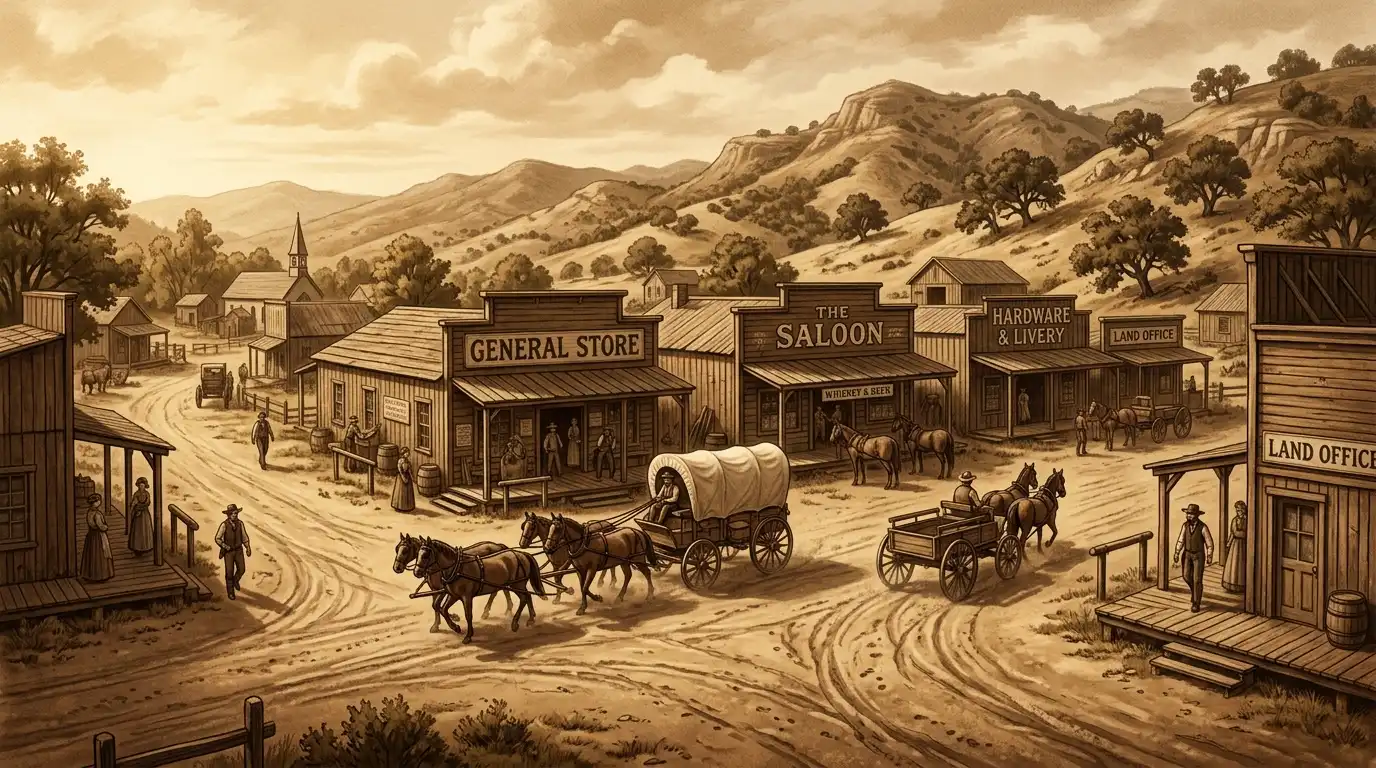
1. The Four Corners: Where Four Homesteads Met
In the late 1860s and early 1870s, four key settlers acquired adjacent quarter-sections of land in the valley: Rudolph Cook, John Thornburgh, Isaac Fesler, and Isaac Miller. At the precise intersection point where their four properties met—what is now the bustling corner of Broadway and Main Street in downtown Santa Maria—they saw an opportunity.
In 1874, each of the four pioneers donated strips of their land to form a 40-acre townsite grid. They laid out wide streets and named their initial settlement Central City due to its geographical placement within the valley.
2. Mail Confusion and the Renaming to Santa Maria
As Central City grew with blacksmith shops, general stores, and residential homes, a postal dilemma emerged. Mail intended for the growing California agricultural hub was frequently misrouted to Central City, Colorado—a booming gold mining town at the time.
To resolve the continuous delivery mix-ups, residents voted to rename their town in 1882. They selected Santa Maria, honoring the original name given to the local property decades earlier by Californio ranchero Juan Pacífico Ontiveros. The official townsite map was updated, and Santa Maria was officially incorporated as a city in 1905.
3. The Railroad, Black Gold, and Agricultural Boom
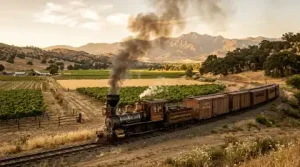
The arrival of the narrow-gauge Pacific Coast Railway in 1882 opened direct trade channels, allowing local farmers to ship grains, beans, and produce to broader markets. Shortly after the turn of the century, the discovery of oil at the Orcutt Oil Field in 1901 brought an industrial boom that accelerated municipal infrastructure, paving the way for schools, civic buildings, and residential expansion.
To learn more about local preservation efforts, historical archives, and early pioneer artifacts, visit the Santa Maria Valley Historical Society Museum.
4. Honoring the Legacy: Street Names and Modern Living
Today, the legacy of Santa Maria’s founders remains embedded in everyday life. Major thoroughfares and local schools—such as Cook Street, Thornburg Street, Fesler Junior High, and Miller Elementary—directly honor the four original homesteaders who surveyed the town center.
From its origins as a quiet agricultural intersection to its status today as a vibrant commercial center and American Viticultural Area (AVA), Santa Maria’s foundation rests on community collaboration and visionary planning.