
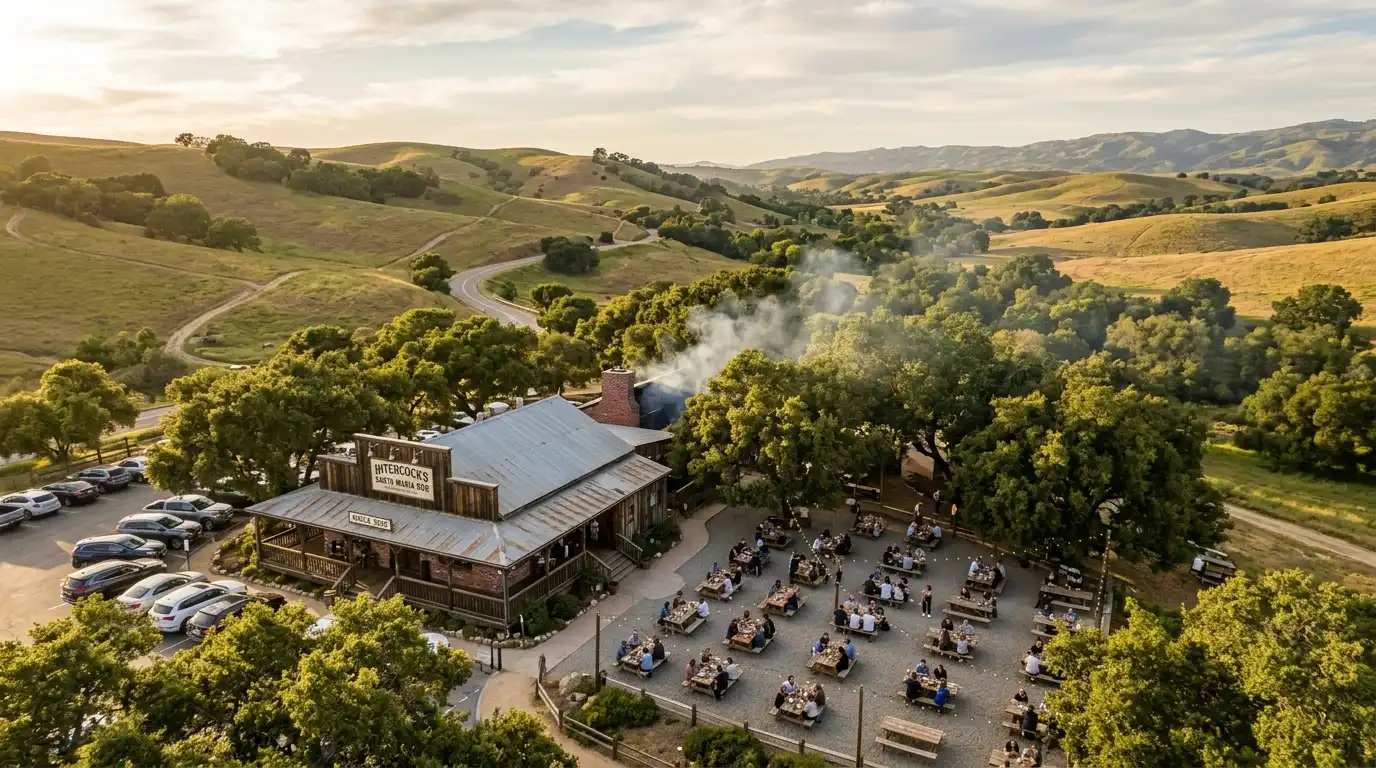
Welcome to Santa Maria-Style BBQ—California’s purest and most distinct native barbecue tradition. Grounded in simplicity, high-heat sear, and centuries of regional ranching history, this iconic meal is far more than dinner; it is a way of life across the Santa Maria Valley. In this ultimate santa maria style bbq guide, we dive deep into its history, signature elements, classic recipes, and where to find the absolute best plates in town.
The Heritage of Santa Maria-Style Barbecue
The roots of Santa Maria-style BBQ stretch back to the mid-19th century, during the height of the California Mexican Rancho era. After seasonal cattle roundups, local vaqueros (cowboys) and ranch owners would gather to host large celebratory feasts for their neighbors and crews.
Large pits were hand-dug straight into the earth and filled with burning coals from native Coast Live Oak (commonly referred to as red oak). Massive cuts of beef were skewered on long iron willow rods and suspended directly over the open pit. Seasoned simply with coarse sea salt, black pepper, and garlic, the meat absorbed the fragrant, mild smoke of the local timber while developing a deep caramelized crust.
As the ranchos transitioned into modern townships, local service clubs and community groups preserved these ranch traditions by hosting large public barbecues throughout Santa Barbara County. By the mid-20th century, Santa Maria-Style BBQ had solidified its place as a regional treasure.
The Pillars of Authentic Santa Maria BBQ
Unlike Texas brisket or Carolina pulled pork, authentic Santa Maria barbecue relies on five non-negotiable elements. Take away any one of these components, and you are no longer eating a true Santa Maria pit feast:
1. Red Oak Wood (Quercus agrifolia)
Red oak is the soul of Santa Maria BBQ. Native to the Central Coast hills, red oak burns exceptionally hot, clean, and slow. It imparts a savory, smooth smokiness that never overpowers the beef, producing a signature mahogany crust.
2. The Cut: Top Sirloin or Tri-Tip
Historically, the ranchos used top sirloin roast. However, in the late 1950s, a local butcher named Bob Schutz popularized the triangular cut from the bottom sirloin—known today nationwide as tri-tip. Today, both thick-cut top sirloin and tri-tip are considered authentic.
3. The Open-Pit Crank Grill
Santa Maria grills feature a distinctive iron design with a hand-crank wheel attached to a cable pulley system. This allows the pitmaster to raise or lower the grill grate over the hot oak coals, precisely controlling the temperature and flare-ups.
4. The Simple Dry Rub
Forget thick, sugary rubs and heavy BBQ sauces. Authentic seasoning requires only three core ingredients applied generously before hitting the pit:
- Coarse salt (or kosher salt)
- Freshly cracked black pepper
- Granulated garlic or garlic powder
5. The Classic Side Dishes
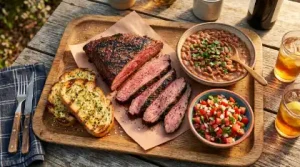
A traditional Santa Maria barbecue plate is incomplete without its legendary accompaniments:
- Pinquito Beans: A small, pink heirloom bean native to the Santa Maria Valley, slow-cooked with bacon, ham, garlic, and tomato.
- Salsa: A fresh, chunky, non-blended salsa made from diced tomatoes, celery, onion, cilantro, and mild green chiles.
- Garlic Bread: Sweet French bread dipped in garlic butter and toasted directly over the red oak fire.
- Green Salad: A simple, crisp green salad tossed with a light vinaigrette to cut through the richness of the meat.
How to Cook Tri-Tip Santa Maria Style
Recreating an authentic Santa Maria tri-tip at home requires attention to heat control and meat temperature. Follow this classic pitmaster approach:
Step 1: Prep & Season
Trim any excess silver skin from a 2.5 to 3-pound tri-tip roast, leaving a thin layer of the fat cap intact for moisture. Combine equal parts coarse kosher salt, freshly ground black pepper, and garlic powder. Rub the seasoning generously onto all sides of the beef and let it rest at room temperature for 30–45 minutes.
Step 2: Fire Up the Pit
Light real red oak wood chunks (or red oak lump charcoal). Allow the wood to burn down until you have a hot bed of glowing embers with a light layer of ash.
Step 3: Sear & Raise
Place the tri-tip fat-side up on the grill grate positioned roughly 4 inches above the coals. Sear for 5–7 minutes per side until a deep, fragrant crust forms. Once seared, raise the grate to 8–10 inches above the coals to cook the interior gently.
Step 4: Rest & Slice Across the Grain
Remove the meat when an instant-read thermometer registers 130°F for medium-rare (or 135°F for medium). Cover loosely with foil and let it rest for 15 minutes. Slice thinly against the grain—noting that the grain direction changes in a tri-tip roast—to guarantee maximum tenderness.
“The secret to a perfect tri-tip isn’t a secret sauce—it’s respecting the red oak smoke, keeping the rub simple, and slicing against the grain.”
Where to Find the Best BBQ in Santa Maria Valley
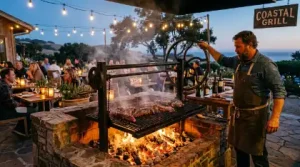 Visiting the region? You can follow the scent of red oak smoke drifting across town on any weekend. Here are a few essential spots to experience the tradition firsthand:
- The Hitching Post (Casmalia): Operating in an 1800s building, this legendary steakhouse serves top sirloin and steaks grilled over open red oak pits, maintaining true historic roots.
- Far Western Tavern (Orcutt): Founded by ranching families, this regional staple honors contemporary ranch cuisine while executing flawless traditional Santa Maria BBQ plates.
- Shaw’s Steakhouse (Santa Maria): A beloved local institution celebrated for thick cuts of oak-grilled steaks, classic atmosphere, and traditional sides.
- Weekend Charity Pit Stands: On Saturdays and Sundays, local non-profits, high schools, and service clubs set up large mobile pit rigs in parking lots along El Camino Real and Main Street, serving some of the freshest tri-tip sandwiches in the valley.
Experience Central Coast Tradition
Santa Maria-style BBQ is more than a regional specialty; it is a proud reflection of California’s ranching history, vibrant agricultural communities, and agricultural abundance. Whether you are firing up red oak in your own backyard or dining at an iconic Central Coast steakhouse, every bite connects you to over 150 years of flavor, community, and tradition.